

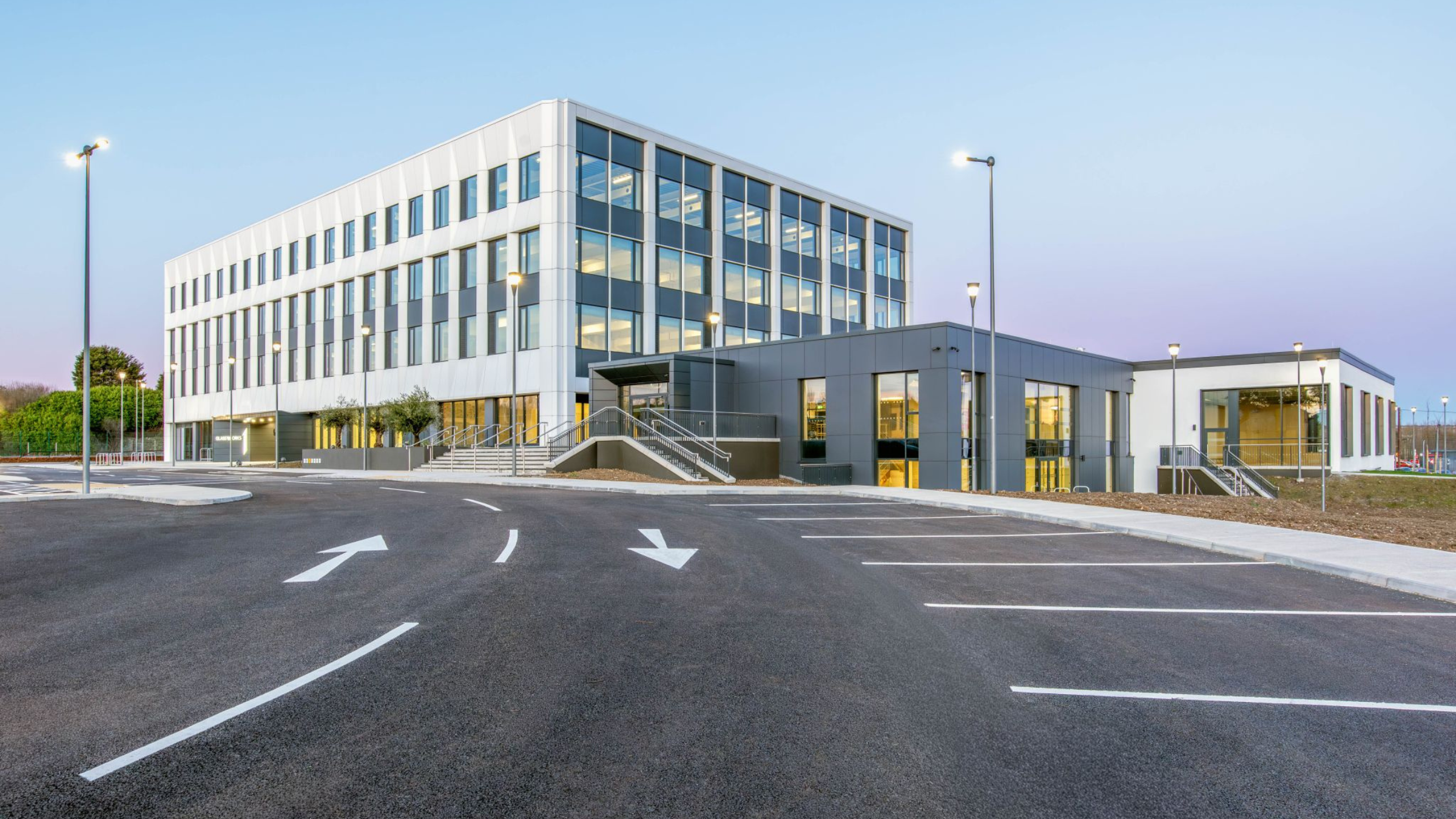


Building One at the Glassworks Campus represents the first completed phase of a transformative mixed-use enterprise and innovation district on the former Waterford Crystal site.
Positioned adjacent to SETU and key transport links, the project forms the flagship office development within a wider 37-acre regeneration strategy for Waterford city.
Designed by Fewer Harrington & Partners, Building One establishes a new benchmark for Grade A office accommodation in the South East, combining sustainable design, flexible workspace planning, and strong urban integration within a landscaped campus setting.
Design Vision
The architectural approach for Building One was driven by the ambition to create a contemporary workplace environment that responds to the legacy of the site while enabling a future-facing innovation district.
Key design objectives included:
- Creating a high-performance, sustainable office building with long-term adaptability
- Establishing a strong architectural identity for the Glassworks Campus
- Maximising natural light and occupant wellbeing through generous floorplates and glazing
- Supporting collaboration between education, enterprise, and research sectors
- Delivering a high-quality public realm integrated with the surrounding campus landscape
The result is a landmark commercial building that anchors the wider regeneration vision for the Glassworks site.
Building One comprises approximately 80,000 sq ft of Grade A office accommodation arranged across four principal floorplates. The building form is defined by a clear, rational structure that prioritises flexibility and efficiency, allowing occupiers to configure space to suit a range of operational models.
The façade design incorporates a high-performance glazed system with aluminium framing, balancing transparency and environmental control. A generous, double-height entrance lobby establishes a strong civic presence and enhances arrival experience.
Internally, the design supports:
- Open-plan office environments
- Dedicated meeting and collaboration spaces
- High-quality reception and amenity areas
- End-of-trip facilities including showers, changing rooms, and cycle storage
Sustainability Strategy
Sustainability is central to the design ethos of Building One, which has been developed to achieve optimum sustainability using modern building techniques in line with LEED accreditation principles.
Key environmental strategies include:
- High-performance building envelope with enhanced insulation and airtightness
- Energy-efficient mechanical systems supported by heat pump technology
- Intelligent Building Management System (BMS) for operational efficiency
- Maximised daylighting through façade optimisation
- Provision for EV charging and sustainable transport integration